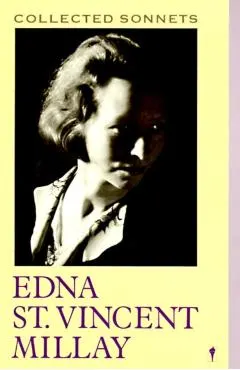
Collected Sonnets
Millay, Edna St Vincent: - Edna St. Vincent Millay was born in 1892 in Rockland, Maine, the eldest of three daughters, and was encouraged by her mother to develop her talents for music and poetry.
Istoric în construcțieEvoluția prețului
Istoricul de preț se construiește — mai avem nevoie de câteva zile de monitorizare pentru un grafic relevant.
Ce arată măsurătorile noastre
istoric în construcțieCifrele sunt calculate exclusiv din prețurile înregistrate de noi, zilnic, la magazinele monitorizate.
Graficul arată cel mai mic preț disponibil în fiecare zi, între toate magazinele monitorizate. Linia verde este minimul din ultimele 30 de zile.
Îți trimitem un e-mail când prețul scade sub —. Îți cerem o confirmare pe e-mail înainte de a-ți trimite orice alertă și te poți dezabona oricând.
Despre acest produs
Millay, Edna St Vincent: - Edna St. Vincent Millay was born in 1892 in Rockland, Maine, the eldest of three daughters, and was encouraged by her mother to develop her talents for music and poetry. Her long poem Renascence won critical attention in an anthology contest in 1912 and secured for her a patron who enabled her to go to Vassar College. nAfter graduating in 1917 she lived in Greenwich Village in New York for a few years, acting, writing satirical pieces for journals (usually under a pseudonym), and continuing to work at her poetry. She traveled in Europe throughout 1921-22 as a foreign correspondent for Vanity Fair. Her collection A Few Figs from Thistles (1920) gained her a reputation for hedonistic wit and cynicism, but her other collections (including the earlier Renascence and Other Poems [1917]) are without exception more seriously passionate or reflective. n nIn 1923 she married Eugene Boissevain and -- after further travel -- embarked on a series of reading tours which helped to consolidate her nationwide renown. From 1925 onwards she lived at Steepletop, a farmstead in Austerlitz, New York, where her husband protected her from all responsibilities except her creative work. Often involved in feminist or political causes (including the Sacco-Vanzetti case of 1927), she turned to writing anti-fascist propaganda poetry in 1940 and further damaged a reputation already in decline. In her last years of her life she became more withdrawn and isolated, and her health, which had never been robust, became increasingly poor. n nShe died in 1950.n
Descriere preluată din fișa produsului de la Libris.
Produse similare din Ficțiune & literatură
Vezi categoria →