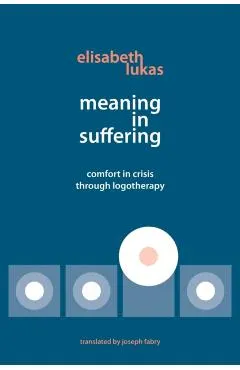
Meaning in Suffering: Comfort in Crisis through Logotherapy
nThis 1986 classic has been renewed with fresh graphics and crisp typesetting.
A fost și mai ieftin — l-am prins la 112,10 leiCum s-a mișcat prețul
Ce am observat noi
peste minimToate cifrele de mai sus ies din ce am notat noi, în fiecare noapte. Nu le-am luat de nicăieri.
În fiecare zi luăm cel mai mic preț dintre toate magazinele și îl punem pe grafic. Linia verde e cel mai jos a coborât în ultima lună.
Lasă-ne adresa și îți scriem dacă scade sub —. Un singur e-mail, când chiar se întâmplă ceva. Îți cerem întâi o confirmare, și te poți retrage oricând dintr-un click.
Ce zice magazinul despre el
nThis 1986 classic has been renewed with fresh graphics and crisp typesetting. Elisabeth Lukas' artistic discovery of the uniqueness of each individual shines across dozens of case studies and examples; thus she illuminates the potential for meaning in the presence of even intractable pain, guilt, and suffering. Lukas demonstrates a living logotherapy, not by standardized techniques, but by the compassion and insight she brings into each therapeutic relationship. The true heroes of life are not the triumphant victors, but the defeated who find a ray of hope (p. 52). As Lukas notes in the introduction: For thousands of years, people have done pretty well without the science of psychotherapy. Yet, something like psychotherapy has always existed-through persons who, with charisma, persuasiveness, and force of conviction, were able to bring comfort to those looking for help. Such help was usually based on a specific philosophy of life. The afflicted were promised eternal well-being and justice in the hereafter, their suffering was presented as a test on their way to happiness, or philosophical-ethical images were invoked to make blows of fate bearable. Psychotherapy was religion and vice versa. This embeddedness in mysticism made it difficult for psychotherapy to find a scientific approach. Today, if we try to find rational explanations for irrational behavior and offer rational help for irrational psychological problems, we stand on a narrow ridge between two abysses: On the one side lies the danger of reverting to mysticism; on the other, slipping into a mechanized manipulation of the human person. Has psychology, on its long development through magic, exorcism, trickery, and fanaticism, finally attained the status of science? In recent decades, great strides have been made in that direction. Successes were conspicuous and resulted in a great variety of tools in a giant psychological workshop to serve people, but unfortunately the specifically human dimension--the spirit--was left out. Psychotherapy without magic has been replaced by psychotherapy without spirit. What was gained in the field of science was lost from humanity. Psychotherapists may choose from a great number of methods, but are forced to walk on that narrow ridge between old views and new perspectives, between speculative interpretations and human programming. It is a path illuminated by alarmingly few firm criteria. This book is written for those who trust psychotherapy to fi
Descrierea e luată de la Libris.
Produse similare din Psihologie & filosofie
Vezi categoria →