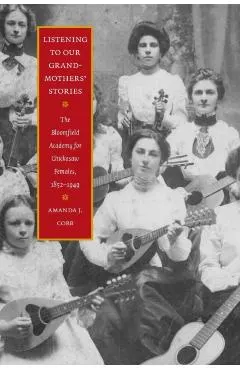
Listening to Our Grandmothers' Stories: The Bloomfield Academy for Chickasaw Females, 1852-1949
nBloomfield Academy was founded in 1852 by the Chickasaw Nation in conjunction with missionaries.
Încă îl urmărimCum s-a mișcat prețul
Ce am observat noi
la minimToate cifrele de mai sus ies din ce am notat noi, în fiecare noapte. Nu le-am luat de nicăieri.
În fiecare zi luăm cel mai mic preț dintre toate magazinele și îl punem pe grafic. Linia verde e cel mai jos a coborât în ultima lună.
Lasă-ne adresa și îți scriem dacă scade sub —. Un singur e-mail, când chiar se întâmplă ceva. Îți cerem întâi o confirmare, și te poți retrage oricând dintr-un click.
Ce zice magazinul despre el
nBloomfield Academy was founded in 1852 by the Chickasaw Nation in conjunction with missionaries. It remained open for nearly a century, offering Chickasaw girls one of the finest educations in the West. After being forcibly relocated to Indian Territory, the Chickasaws viewed education as instrumental to their survival in a rapidly changing world. Bloomfield became their way to prepare emerging generations of Chickasaw girls for new challenges and opportunities. Amanda J. Cobb became interested in Bloomfield Academy because of her grandmother, Ida Mae Pratt Cobb, an alumna from the 1920s. Drawing on letters, reports, interviews with students, and school programs, Cobb recounts the academy's success story. In stark contrast to the federally run off-reservation boarding schools in operation at the time, Bloomfield represents a rare instance of tribal control in education. For the Chickasaw Nation, Bloomfield-a tool of assimilation-became an important method of self-preservation Amanda J. Cobb is an associate professor of American studies at the University of New Mexico and is the editor of American Indian Quarterly. She is a citizen of the Chickasaw Nation of Oklahoma.
Descrierea e luată de la Libris.
Produse similare din Istorie & societate
Vezi categoria →