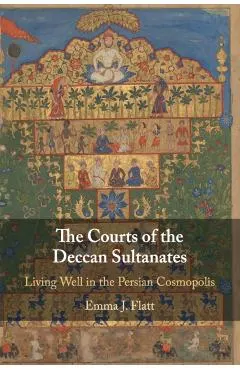
The Courts of the Deccan Sultanates: Living Well in the Persian Cosmopolis
nIn the late fifteenth and sixteenth centuries, courtliness was crucial to the political and cultural life of the Deccan.
Încă îl urmărimCum s-a mișcat prețul
Ce am observat noi
la minimToate cifrele de mai sus ies din ce am notat noi, în fiecare noapte. Nu le-am luat de nicăieri.
În fiecare zi luăm cel mai mic preț dintre toate magazinele și îl punem pe grafic. Linia verde e cel mai jos a coborât în ultima lună.
Lasă-ne adresa și îți scriem dacă scade sub —. Un singur e-mail, când chiar se întâmplă ceva. Îți cerem întâi o confirmare, și te poți retrage oricând dintr-un click.
Ce zice magazinul despre el
nIn the late fifteenth and sixteenth centuries, courtliness was crucial to the political and cultural life of the Deccan. Divided between six states competing for territory, resources and skills, the medieval and early modern Deccan was a region of striking ethnic, linguistic and religious diversity. People used multifaceted trans-regional networks - mercantile, kinship, friendship and intellectual - to move across the Persian-speaking world and to find employment at the Deccan courts. This movement, Emma J. Flatt argues, was facilitated by the existence of a shared courtly disposition. Engagement in courtly skills such as letter-writing, perfume-making, astrological divination, performing magic, sword-fighting and wrestling thus became a route to both worldly success and ethical refinement. Using a diverse range of treatises, chronicles, poetry and letters, Flatt unpicks the ways this challenged networks of acceptable behaviour and knowledge in the Indo-Islamicate courtly world - and challenges the idea of perpetual hostility between Islam and Hinduism in Indian history.
Descrierea e luată de la Libris.
Produse similare din Istorie & societate
Vezi categoria →