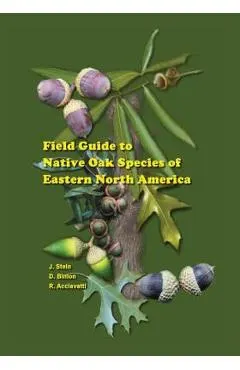
Field Guide to Native Oak Species of Eastern North America
nOaks are primarily temperate region trees and shrubs numbering approximately 600 species worldwide.
Încă îl urmărimCum s-a mișcat prețul
Ce am observat noi
la minimToate cifrele de mai sus ies din ce am notat noi, în fiecare noapte. Nu le-am luat de nicăieri.
În fiecare zi luăm cel mai mic preț dintre toate magazinele și îl punem pe grafic. Linia verde e cel mai jos a coborât în ultima lună.
Lasă-ne adresa și îți scriem dacă scade sub —. Un singur e-mail, când chiar se întâmplă ceva. Îți cerem întâi o confirmare, și te poți retrage oricând dintr-un click.
Ce zice magazinul despre el
nOaks are primarily temperate region trees and shrubs numbering approximately 600 species worldwide. Oaks have occupied the nonglaciated landscape of North America since the Cretaceous Period. Fifty oak species are represented in two-thirds of the eastern North American forest cover types and dominate 68 percent of hardwood forests (191 million acres). Oaks have figured prominently in folklore, construction, food sources, medications, and dyes. Great political events have occurred under charter oaks, and Native Americans utilized acorns as food (particularly the sweeter white oaks) and the inner bark as medicine (Q. falcata, Q. ilicifolia, Q. imbricaria, Q. muehlenbergii, Q. rubra, and others). This genus, which includes economically important hardwoods, is also critical for meeting watershed, recreation, and wildlife management goals. This field guide provides an illustrated reference for identification of eastern oaks and can be used in several ways. Oak identification can be accomplished by utilizing the leaf keys, cross referencing scientific or local common names in the index, verifying similarities between leaf specimens and the illustrated oak leaf reference charts, and comparing descriptions provided for each species. Distribution maps may also aid in the separation of similar appearing species. The distribution of each oak species can be further defined according to ecoregion. A map of the eastern North American ecoregion provinces is provided (p. 106) and ecoregion provinces associated with each oak species are also included in the summary tables (pp. 109-119). The same common names may be used for different species or many common names may be applied to a single species in more than one location. Therefore, the preferred name is shown in bold with other names cross referenced in the index. Leaf morphology may vary considerably depending upon a combination of hybridization, tree age, position in the crown, and available sunlight. Many oaks are noted for hybridizing with other species in the same subgenus. Such progeny differ from the typical form, are usually isolated individuals or have a limited distribution, and are not included here. Characteristics used in the field identification key are limited to mature leaves with full exposure to the sun. When using the key, it is recommended that species verification be made by reference to other tree characteristics listed in the text. This field guide includes all native oak species occurring ea
Descrierea e luată de la Libris.
Produse similare din Științe & tehnică
Vezi categoria →