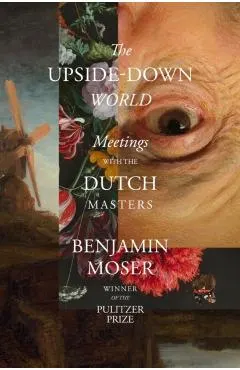
The Upside-Down World: Meetings with the Dutch Masters
Arriving as a young writer in an ancient Dutch town, Benjamin Moser was flummoxed, as any newcomer might be, by the language, people, and culture.
A fost și mai ieftin — l-am prins la 198,15 leiCum s-a mișcat prețul
Ce am observat noi
peste minimToate cifrele de mai sus ies din ce am notat noi, în fiecare noapte. Nu le-am luat de nicăieri.
În fiecare zi luăm cel mai mic preț dintre toate magazinele și îl punem pe grafic. Linia verde e cel mai jos a coborât în ultima lună.
Lasă-ne adresa și îți scriem dacă scade sub —. Un singur e-mail, când chiar se întâmplă ceva. Îți cerem întâi o confirmare, și te poți retrage oricând dintr-un click.
Ce zice magazinul despre el
Arriving as a young writer in an ancient Dutch town, Benjamin Moser was flummoxed, as any newcomer might be, by the language, people, and culture. As he started exploring his newly adopted country, he stumbled upon the great painters of the Dutch Golden Age, that galaxy of sixteenth- and seventeenth-century artists--Rembrandt, Hals, and Vermeer among them--who seemed to be asking the same questions he'd been grappling with: Why do we make art? What even is art, anyway? Does it provide solace? Or something more necessary to human happiness? Year after year, Moser coaxed answers out of these old paintings, discovering in Rembrandt an affinity for the unequivocally dead, and in Ter Borch, an astonishing intimacy. Featuring seventeen artists and a beautifully designed, four-color text, The Upside-Down World, in the tradition of How Proust Can Change Your Life, seeks to explain how such resplendent beauty can--indeed must--flourish in a world so endlessly marred by tragedy. nArriving as a young writer in an ancient Dutch town, Benjamin Moser found himself visiting--casually at first, and then more and more obsessively--the country's great museums. Inside these old buildings, he discovered the remains of the Dutch Golden Age and began to unearth the strange, inspiring, and terrifying stories of the artists who gave shape to one of the most luminous moments in the history of human creativity. Beyond the sainted Rembrandt--who harbored a startling darkness--and the mysterious Vermeer, whose true subject, it turned out, was lurking in plain sight, Moser got to know a whole galaxy of geniuses: the doomed virtuoso Carel Fabritius, the anguished wunderkind Jan Lievens, the deaf prodigy Hendrik Avercamp. And through their artwork, he got to know their country, too: from the translucent churches of Pieter Saenredam to Paulus Potter's muddy barnyards, and from Pieter de Hooch's cozy hearths to Jacob van Ruisdael's tragic trees. Year after year, as he tried to make a life for himself in the Netherlands, Moser found friends among these centuries-dead artists. And he found that they, too, were struggling with the same questions that he was. Why do we make art? What even is art, anyway--and what is an artist? What does it mean to succeed as an artist, and what does it mean to fail? Is art a consolation--or a mortal danger? The Upside-Down World is an invitation to ask these questions, and to turn them on their heads: to look, and then to look again. This is Holland and i
Descrierea e luată de la Libris.
Produse similare din Diverse
Vezi categoria →