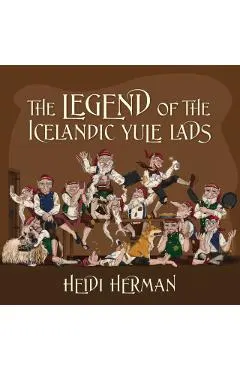
The Legend of the Icelandic Yule Lads
nThe Legend of the Yule Lads is well-known among Icelanders and has been passed down from generation to generation for over 1,500 years.
Încă îl urmărimCum s-a mișcat prețul
Ce am observat noi
la minimToate cifrele de mai sus ies din ce am notat noi, în fiecare noapte. Nu le-am luat de nicăieri.
În fiecare zi luăm cel mai mic preț dintre toate magazinele și îl punem pe grafic. Linia verde e cel mai jos a coborât în ultima lună.
Lasă-ne adresa și îți scriem dacă scade sub —. Un singur e-mail, când chiar se întâmplă ceva. Îți cerem întâi o confirmare, și te poți retrage oricând dintr-un click.
Ce zice magazinul despre el
nThe Legend of the Yule Lads is well-known among Icelanders and has been passed down from generation to generation for over 1,500 years. The country's rich history of legends and folktales featuring a host of mystical creatures is reflected in this unique Christmas tale about trolls. However, like many of Iceland's legends, the story of the Yule Lads is virtually unknown outside of the country. This particular story can be traced back to 13th Century and the Snorri Sturlson's Edda. The Edda refers to the recognized mother of the Yule Lad's, a horrible ogress named Gryla. In that time, Gryla and her many troll offspring were said to terrorize children, hauling badly behaved children off in great burlap bags to be later eaten. The tales of Gryla and the Yule Lads became so gruesome and disturbing that in 1746 a public decree was issued to forbid parents from using these stories to terrify children. In the years since, the Yule Lads' character has been softened from horrible trolls to mischievous tricksters. As the legend goes, the Yule Lads come down from the mountain, one each day starting 13 days before Christmas. They stay through Christmas Day, then leave, one each day, in the order they arrived. In 1932, a popular poem was written about the J lasveinarnir Yule Lads] by J hannes from K tlum and it first appeared in the book J lin Koma Christmas is coming]. As presented in J hannes poem, each of the Yule Lad's name reflects their particular brand of mischief. Stekkjastaur (Sheep Cote Clod) starts things off on December 12th and is best known for stealing sheep's milk. Giljagaur (Gulley-Gawk) arrives the next day and is preoccupied with sneaking into the barn to steal cow's milk. St fur (Shorty) steals bits of food left on frying pans while Thv rusleikir (Spoon-licker) steals spoons from the kitchen to lick and Pottasleikir (Pot-licker) steals pots and pans for the leftovers. Askasleikir (Bowl-licker) arrives next and sneak away with the bowls of food left for the family pets. Hurdaskellir (Door-slammer) brings his mischief on December 18th by knocking, squeaking hinges on doors, and generally creating thumps and bumps in the night. Skyrg mur (Skyr-gobbler) is next with the primary purpose of pigging out on Skyr, which is a very rich Icelandic version of yogurt. Bj gnakr kir (Sausage-swiper) joins in on December 20th focused on stealing sausage while Gluggag gir (Window Peeper) keeps himself busy looking for shiny objects to stuff in his pockets. G tt
Descrierea e luată de la Libris.
Produse similare din Ficțiune & literatură
Vezi categoria →