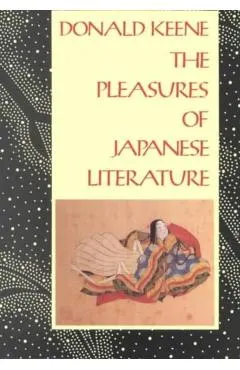
The Pleasures of Japanese Literature
Considered the Western world's leading interpreter of traditional Japanese culture, Donald Keene now offers an enjoyable introduction to Japanese literature for the general reader.
Încă îl urmărimCum s-a mișcat prețul
Ce am observat noi
la minimToate cifrele de mai sus ies din ce am notat noi, în fiecare noapte. Nu le-am luat de nicăieri.
În fiecare zi luăm cel mai mic preț dintre toate magazinele și îl punem pe grafic. Linia verde e cel mai jos a coborât în ultima lună.
Lasă-ne adresa și îți scriem dacă scade sub —. Un singur e-mail, când chiar se întâmplă ceva. Îți cerem întâi o confirmare, și te poți retrage oricând dintr-un click.
Ce zice magazinul despre el
Considered the Western world's leading interpreter of traditional Japanese culture, Donald Keene now offers an enjoyable introduction to Japanese literature for the general reader. Keene's deep learning enables him to construct an overview as delightful to read as it is informative. nPerhaps no one is more qualified to write about Japanese culture than Donald Keene, considered the leading interpreter of that nation's literature to the Western world. The author, editor, or translator of nearly three dozen books of criticism and works of literature, Keene now offers an enjoyable and beautifully written introduction to traditional Japanese culture for the general reader. nThe book acquaints the reader with Japanese aesthetics, poetry, fiction, and theater, and offers Keene's appreciations of these topics. Based on lectures given at the New York Public Library, The Metropolitan Museum of Art, and the University of California, Los Angeles, the essays -though written by a renowned scholar- presuppose no knowledge of Japanese culture. Keene's deep learning, in fact, enables him to construct an overview as delightful to read as it is informative. n nHis insights often illuminate aspects of traditional Japanese culture that endure today. One of these is the appreciation of perishability. this appreciation os seen in countless little bits of Japanese life: in temples made of wood instead of durable materials; in the preference for objects -such as pottery- that are worn, broken, or used rather than new; and in the national love of the delicate cherry blossom, which normally falls after a brief three days of flowering. Keene quotes the fourteenth-century Buddhist monk Kenko, who wrote that the most precious thing about life is its uncertainty. n nThroughout the volume, Keene demonstrates that the rich artistic and social traditions of Japan can indeed be understood by readers from our culture. This book will enlighten anyone interested in Japanese literature and culture.n
Descrierea e luată de la Libris.
Produse similare din Ficțiune & literatură
Vezi categoria →