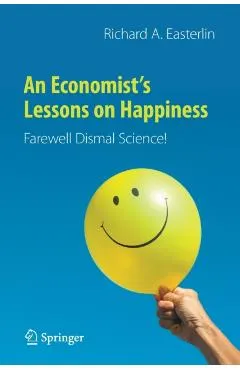
An Economist's Lessons on Happiness: Farewell Dismal Science!
n nOnce called the dismal science, economics now offers prescriptions for improving people's happiness.
Încă îl urmărimCum s-a mișcat prețul
Ce am observat noi
la minimToate cifrele de mai sus ies din ce am notat noi, în fiecare noapte. Nu le-am luat de nicăieri.
În fiecare zi luăm cel mai mic preț dintre toate magazinele și îl punem pe grafic. Linia verde e cel mai jos a coborât în ultima lună.
Lasă-ne adresa și îți scriem dacă scade sub —. Un singur e-mail, când chiar se întâmplă ceva. Îți cerem întâi o confirmare, și te poți retrage oricând dintr-un click.
Ce zice magazinul despre el
n nOnce called the dismal science, economics now offers prescriptions for improving people's happiness. In this book Richard Easterlin, the father of happiness economics, draws on a half-century of his own research and that conducted by fellow economists and psychologists to answer in plain language questions like: Can happiness be measured? Will more money make me happier? What about finding a partner? Getting married? Having a baby? More exercise? Does religion help? Who is happier-women or men, young or old, rich or poor? How does happiness change as we go through different stages of life? n nPublic policy is also in the mix: Can the government increase people's happiness? Should the government increase their happiness? Which countries are the happiest and why? Does a country need to be rich to be happy? Does economic growth improve the human lot? n n Some of the answers are surprising (no, more money won't do the trick; neither will economic growth; babies are a mixed blessing!), but they are all based on reason and well-vetted evidence from the fields of economics and psychology. In closing, Easterlin traces the genesis of the ongoing Happiness Revolution and considers its implications for people's lives down the road. nn
Descrierea e luată de la Libris.
Produse similare din Business & economie
Vezi categoria →