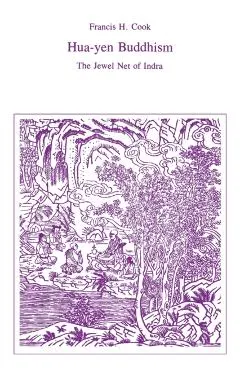
Hua-Yen Buddhism: The Jewel Net of Indra
n nHua-yen is regarded as the highest form of Buddhism by most modern Japanese and Chinese scholars.
Încă îl urmărimCum s-a mișcat prețul
Ce am observat noi
la minimToate cifrele de mai sus ies din ce am notat noi, în fiecare noapte. Nu le-am luat de nicăieri.
În fiecare zi luăm cel mai mic preț dintre toate magazinele și îl punem pe grafic. Linia verde e cel mai jos a coborât în ultima lună.
Lasă-ne adresa și îți scriem dacă scade sub —. Un singur e-mail, când chiar se întâmplă ceva. Îți cerem întâi o confirmare, și te poți retrage oricând dintr-un click.
Ce zice magazinul despre el
n nHua-yen is regarded as the highest form of Buddhism by most modern Japanese and Chinese scholars. This book is a description and analysis of the Chinese form of Buddhism called Hua-yen (or Hwa-yea), Flower Ornament, based largely on one of the more systematic treatises of its third patriarch. Hua-yen Buddhism strongly resembles Whitehead's process philosophy, and has strong implications for modern philosophy and religion. Hua-yen Buddhism explores the philosophical system of Hua-yen in greater detail than does Garma C.C. Chang's The Buddhist Teaching of Totality (Penn State, 1971). An additional value is the development of the questions of ethics and history. Thus, Professor Cook presents a valuable sequel to Professor Chang's pioneering work. The Flower Ornament School was developed in China in the late 7th and early 8th centuries as an innovative interpretation of Indian Buddhist doctrines in the light of indigenous Chinese presuppositions, chiefly Taoist. Hua-yen is a cosmic ecology, which views all existence as an organic unity, so it has an obvious appeal to the modern individual, both students and layman.n
Descrierea e luată de la Libris.
Produse similare din Religie & spiritualitate
Vezi categoria →