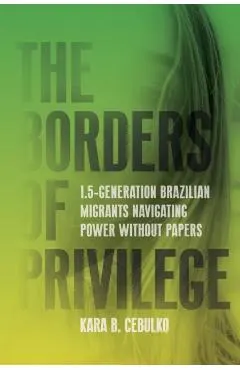
The Borders of Privilege: 1.5-Generation Brazilian Migrants Navigating Power Without Papers
nBecause whiteness is not a given for Brazilians in the U.S., some immigrants actively construct it as a protective mechanism against the stigma normally associated with illegality.
A fost și mai ieftin — l-am prins la 219,90 leiCum s-a mișcat prețul
Ce am observat noi
peste minimToate cifrele de mai sus ies din ce am notat noi, în fiecare noapte. Nu le-am luat de nicăieri.
În fiecare zi luăm cel mai mic preț dintre toate magazinele și îl punem pe grafic. Linia verde e cel mai jos a coborât în ultima lună.
Lasă-ne adresa și îți scriem dacă scade sub —. Un singur e-mail, când chiar se întâmplă ceva. Îți cerem întâi o confirmare, și te poți retrage oricând dintr-un click.
Ce zice magazinul despre el
nBecause whiteness is not a given for Brazilians in the U.S., some immigrants actively construct it as a protective mechanism against the stigma normally associated with illegality. In The Borders of Privilege, Kara Cebulko tells the stories of a group of 1.5 generation Brazilians to show how their ability to be perceived as white-their power without papers-shapes their everyday interactions. By strategically creating boundaries with other racialized groups, these immigrants navigate life-course rituals like college, work, and marriage without legal documentation. Few identify as white in the U.S., even as they benefit from the privileges of whiteness. The legal exclusion they feel as undocumented immigrants from Latin America makes them feel a world apart from their white citizen peers. However, their constructed whiteness benefits them when it comes to interactions with law enforcement and professional advancement, challenging narratives that frame legality as a master-status. Understanding these experiences requires us to explore interlocking systems of power, including white supremacy and capitalism, as well as global histories of domination. Cebulko traces the experiences of her interviewees across various stages of life, applying a power without paper lens, and making the case for integrating this perspective into future scholarship, collective broad-based movements for social justice, and public policy.n
Descrierea e luată de la Libris.
Produse similare din Istorie & societate
Vezi categoria →