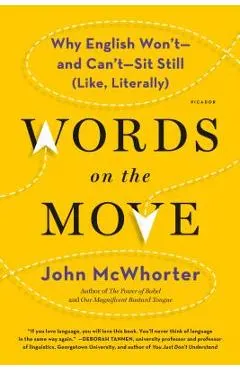
Words on the Move: Why English Won't - And Can't - Sit Still (Like, Literally)
n nLanguage is always changing, but the way English is spoken today rubs many of us the wrong way.
Încă îl urmărimCum s-a mișcat prețul
Ce am observat noi
la minimToate cifrele de mai sus ies din ce am notat noi, în fiecare noapte. Nu le-am luat de nicăieri.
În fiecare zi luăm cel mai mic preț dintre toate magazinele și îl punem pe grafic. Linia verde e cel mai jos a coborât în ultima lună.
Lasă-ne adresa și îți scriem dacă scade sub —. Un singur e-mail, când chiar se întâmplă ceva. Îți cerem întâi o confirmare, și te poți retrage oricând dintr-un click.
Ce zice magazinul despre el
n nLanguage is always changing, but the way English is spoken today rubs many of us the wrong way. Whether it's the use of literally to mean figuratively, or the way young people use LOL or business jargon like What's the ask?--it often seems as if the language is deteriorating before our eyes.n nBut the truth is different and a lot less scary. Drawing examples from everyday life and employing a generous helping of humor, John McWhorter shows that these shifts are common to all languages, and that we should embrace these changes, not condemn them.n nHe opens our eyes to the surprising backstories to words and expressions we use every day. Did you know that silly once meant blessed? Or that ought was the original past tense of owe? Or that the suffix -ly in adverbs is actually a remnant of the word like?n nIn Words on the Move, McWhorter encourages us to marvel at the dynamism and resilience of the English language, and his book offers a delightful journey where we see that words are ever on the move and our lives are all the richer for it.n
Descrierea e luată de la Libris.
Produse similare din Cărți în limbi străine
Vezi categoria →