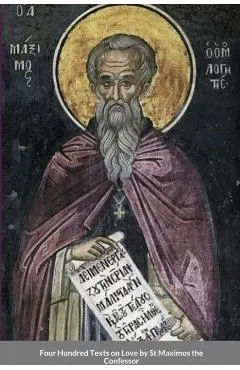
Four Hundred Texts on Love by St Maximos the Confessor
nMaximus the Confessor (Greek: Μάξιμος ὁ Ὁμολογητής), also known as Maximus the Theologian and Maximus of Constantinople (c.
Încă îl urmărimCum s-a mișcat prețul
Ce am observat noi
la minimToate cifrele de mai sus ies din ce am notat noi, în fiecare noapte. Nu le-am luat de nicăieri.
În fiecare zi luăm cel mai mic preț dintre toate magazinele și îl punem pe grafic. Linia verde e cel mai jos a coborât în ultima lună.
Lasă-ne adresa și îți scriem dacă scade sub —. Un singur e-mail, când chiar se întâmplă ceva. Îți cerem întâi o confirmare, și te poți retrage oricând dintr-un click.
Ce zice magazinul despre el
nMaximus the Confessor (Greek: Μάξιμος ὁ Ὁμολογητής), also known as Maximus the Theologian and Maximus of Constantinople (c. 580 - 13 August 662), was a Christian monk, theologian, and scholar. In his early life, Maximus was a civil servant, and an aide to the Byzantine Emperor Heraclius. However, he gave up this life in the political sphere to enter into the monastic life. Maximus had studied diverse schools of philosophy, and certainly what was common for his time, the Platonic dialogues, the works of Aristotle, and numerous later Platonic commentators on Aristotle and Plato, like Plotinus, Porphyry, Iamblichus, and Proclus. When one of his friends began espousing the Christological position known as Monothelitism, Maximus was drawn into the controversy, in which he supported an interpretation of the Chalcedonian formula on the basis of which it was asserted that Jesus had both a human and a divine will. Maximus is venerated in both the Eastern Orthodox and Roman Catholic churches. He was eventually persecuted for his Christological positions; following a trial, his tongue and right hand were mutilated. He was then exiled and died on 13 August 662, in Tsageri in present-day Georgia. However, his theology was upheld by the Third Council of Constantinople and he was venerated as a saint soon after his death.
Descrierea e luată de la Libris.
Produse similare din Religie & spiritualitate
Vezi categoria →