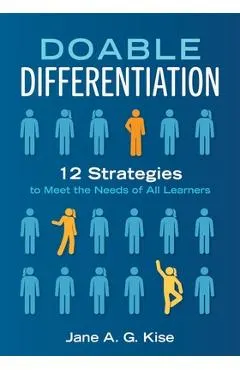
Doable Differentiation: Twelve Strategies to Meet the Needs of All Learners
Differentiating for students' learning preferences can often seem too complex and complicated for too little gain.
Încă îl urmărimCum s-a mișcat prețul
Ce am observat noi
la minimToate cifrele de mai sus ies din ce am notat noi, în fiecare noapte. Nu le-am luat de nicăieri.
În fiecare zi luăm cel mai mic preț dintre toate magazinele și îl punem pe grafic. Linia verde e cel mai jos a coborât în ultima lună.
Lasă-ne adresa și îți scriem dacă scade sub —. Un singur e-mail, când chiar se întâmplă ceva. Îți cerem întâi o confirmare, și te poți retrage oricând dintr-un click.
Ce zice magazinul despre el
Differentiating for students' learning preferences can often seem too complex and complicated for too little gain. Learn a better way forward with the guidance of Doable Differentiation. Author Jane A. G. Kise provides a series of straightforward, high-reward strategies that K-12 educators like you successfully use in their daily practice to support, engage, and challenge students with diverse learning styles. Understand the benefits of differentiation and how to implement differentiated instruction simply and effectively. Learn students' preferred cognitive processing styles to better tailor differentiated lesson plans for all learners' needs. Discover 12 categories of research-based differentiation strategies to implement immediately. Provide students with a variety of accessible options for processing information, engaging in higher-level thinking, and demonstrating learning. Engage learners and develop their proficiency and self-efficacy. Contents: Introduction: What Makes Differentiation Doable? Part 1: The Foundation Chapter 1: Cognitive Processes and Effective Differentiation Chapter 2: Clear Learning Goals and Expectations Part 2: The Strategies Chapter 3: Choice Chapter 4: Wait Time Chapter 5: Unambiguous Instruction Chapter 6: Pressure-Prompted Accommodations Chapter 7: Student-Centered Discussions Chapter 8: Curiosity Creators Chapter 9: Open Questions Chapter 10: Concept Maps Chapter 11: Big Notes Chapter 12: Moveable Organizers Chapter 13: Planned Movement Chapter 14: Talking to Write Part 3: Lesson Planning Chapter 15: Two-Step Differentiation Epilogue References and Resources Index
Descrierea e luată de la Libris.
Produse similare din Manuale & carte școlară
Vezi categoria →