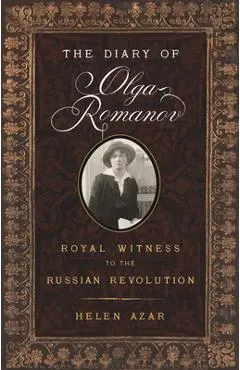
The Diary of Olga Romanov: Royal Witness to the Russian Revolution
nThe First English Translation of the Wartime Diaries of the Eldest Daughter of Nicholas II, the Last Tsar of Russia, with Additional Documents of the PeriodIn August 1914, Russia entered World War I, and with
Încă îl urmărimCum s-a mișcat prețul
Ce am observat noi
la minimToate cifrele de mai sus ies din ce am notat noi, în fiecare noapte. Nu le-am luat de nicăieri.
În fiecare zi luăm cel mai mic preț dintre toate magazinele și îl punem pe grafic. Linia verde e cel mai jos a coborât în ultima lună.
Lasă-ne adresa și îți scriem dacă scade sub —. Un singur e-mail, când chiar se întâmplă ceva. Îți cerem întâi o confirmare, și te poți retrage oricând dintr-un click.
Ce zice magazinul despre el
nThe First English Translation of the Wartime Diaries of the Eldest Daughter of Nicholas II, the Last Tsar of Russia, with Additional Documents of the PeriodIn August 1914, Russia entered World War I, and with it, the imperial family of Tsar Nicholas II was thrust into a conflict they would not survive. His eldest child, Olga Nikolaevna, great-granddaughter of Queen Victoria, had begun a diary in 1905 when she was ten years old and kept writing her thoughts and impressions of day-to-day life as a grand duchess until abruptly ending her entries when her father abdicated his throne in March 1917. Held at the State Archives of the Russian Federation in Moscow, Olga's diaries during the wartime period have never been translated into English until this volume. At the outset of the war, Olga and her sister Tatiana worked as nurses in a military hospital along with their mother, Tsarina Alexandra. Olga's younger sisters, Maria and Anastasia, visited the infirmaries to help raise the morale of the wounded and sick soldiers. The strain was indeed great, as Olga records her impressions of tending to the officers who had been injured and maimed in the fighting on the Russian front. Concerns about her sickly brother, Aleksei, abound, as well those for her father, who is seen attempting to manage the ongoing war. Gregori Rasputin appears in entries, too, in an affectionate manner as one would expect of a family friend. While the diaries reflect the interests of a young woman, her tone grows increasingly serious as the Russian army suffers setbacks, Rasputin is ultimately murdered, and a popular movement against her family begins to grow. At the point Olga ends her writing in 1917, the author continues the story by translating letters and impressions from family intimates, such as Anna Vyrubova, as well as the diary kept by Nicholas II himself. Finally, once the imperial family has been put under house arrest by the revolutionaries, we follow events through observations by Alexander Kerensky, head of the initial Provisional Government, these too in English translation for the first time. Olga would offer no further personal writings, as she and the rest of her family were crowded into the basement of a house in the Urals and shot to death in July 1918.The Diary of Olga Romanov: Royal Witness to the Russian Revolution, translated and introduced by scientist and librarian Helen Azar, and supplemented with additional primary source material, is a remarkable document of
Descrierea e luată de la Libris.
Produse similare din Biografii & memorii
Vezi categoria →