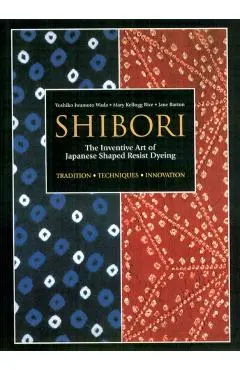
Shibori: The Inventive Art of Japanese Shaped Resist Dyeing
nPotential for creating designs in textiles can be seen even in the physical properties of cloth.
Încă îl urmărimCum s-a mișcat prețul
Ce am observat noi
la minimToate cifrele de mai sus ies din ce am notat noi, în fiecare noapte. Nu le-am luat de nicăieri.
În fiecare zi luăm cel mai mic preț dintre toate magazinele și îl punem pe grafic. Linia verde e cel mai jos a coborât în ultima lună.
Lasă-ne adresa și îți scriem dacă scade sub —. Un singur e-mail, când chiar se întâmplă ceva. Îți cerem întâi o confirmare, și te poți retrage oricând dintr-un click.
Ce zice magazinul despre el
nPotential for creating designs in textiles can be seen even in the physical properties of cloth. The simple fact that cloth tightly compressed into wrinkles or folds resists the penetration of dye is an opportunity--an opportunity to let the pliancy of textiles speak in making designs and patterns. nPeople around the world have recognized this opportunity, producing resist designs in textiles by shaping and then securing cloth in various ways before dyeing. Yet in no other country has the creative potential of this basic principle been understood and applied as it has in Japan. Here, in fact, it has been expanded into a whole family of traditional resist techniques, involving first shaping the cloth by plucking, pinching, twisting, stitching, folding, pleating, and wrapping it, and then securing the shapes thus made by binding, looping, knotting, clamping, and the like. This entire family of techniques is called shibori. n nDesigns created with shibori processes all share a softness of outline and spontaneity of effect. Spontaneity is shibori's special magic, made possible by exploiting the beauty of the fortuitous things that happen when dye enters shaped cloth. n nUsually it is in response to the fact that a craft is being lost that the need for preserving and documenting it arises. The motivation behind this book is no exception, but the authors have gone far beyond simple documentation. Extensive research and experimentation have led to the revival here of shibori techniques that were once well known but have now been largely forgotten in Japan. In addition to more conventional techniques, the work of contemporary fiber artists in Japan and abroad in shibori textile art and wearable art is presented, to suggest the extent of the creative innovation possible. n nThe 104 color and 298 black-and-white plates include a photographic Gallery of Shibori Examples, based on Japan's largest collection of traditional shibori fabrics. Included also are a detailed guide to basic natural dyes used in Japan, the making and care of an indigo vat, and a list of suppliers in North America, as well as a glossary and bibliography. Now available in paperback, this full documentation of one of the world's most inventive and exciting dyeing techniques continues as a classic in the textile field.n
Descrierea e luată de la Libris.
Produse similare din Business & economie
Vezi categoria →