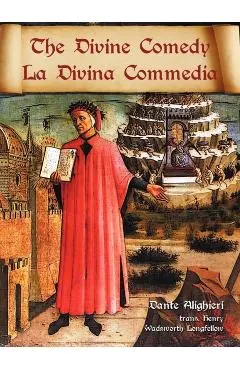
The Divine Comedy / La Divina Commedia - Parallel Italian / English Translation
nThis edition gives a side-by-side parallel translation of Dante's Divine Comedy using Longfellow's translation.
A fost și mai ieftin — l-am prins la 392,59 leiCum s-a mișcat prețul
Ce am observat noi
peste minimToate cifrele de mai sus ies din ce am notat noi, în fiecare noapte. Nu le-am luat de nicăieri.
În fiecare zi luăm cel mai mic preț dintre toate magazinele și îl punem pe grafic. Linia verde e cel mai jos a coborât în ultima lună.
Lasă-ne adresa și îți scriem dacă scade sub —. Un singur e-mail, când chiar se întâmplă ceva. Îți cerem întâi o confirmare, și te poți retrage oricând dintr-un click.
Ce zice magazinul despre el
nThis edition gives a side-by-side parallel translation of Dante's Divine Comedy using Longfellow's translation. The Divine Comedy is an epic poem written by Dante Alighieri between 1308 and his death in 1321. It is generally considered to be the preeminent work of Italian literature and one of the greatest works of world literature. The poem is written in the Tuscan dialect, and the poem helped establish this dialect as the standardized Italian language. The poem is divided into three parts: Inferno, Purgatorio, and Paradiso. At the superficial level, the poem describes Dante's travels through Hell, Purgatory, and Heaven; but at a deeper level, it is an allegory of the soul's journey towards God. In order to articulate this journey towards God, Dante uses medieval Christian theology and philosophy, especially Thomistic philosophy and the Summa Theologica of Thomas Aquinas. Longfellow's translation is considered to be the best translation, overall. Longfellow, being a poet himself, was able to create a flowing translation that has not been surpassed. nThis edition gives a side-by-side parallel translation of Dante's Divine Comedy using Longfellow's translation. The Divine Comedy is an epic poem written by Dante Alighieri between 1308 and his death in 1321. It is generally considered to be the preeminent work of Italian literature and one of the greatest works of world literature. The poem is written in the Tuscan dialect, and the poem helped establish this dialect as the standardized Italian language. The poem is divided into three parts: Inferno, Purgatorio, and Paradiso. At the superficial level, the poem describes Dante's travels through Hell, Purgatory, and Heaven; but at a deeper level, it is an allegory of the soul's journey towards God. In order to articulate this journey towards God, Dante uses medieval Christian theology and philosophy, especially Thomistic philosophy and the Summa Theologica of Thomas Aquinas. Longfellow's translation is considered to be the best translation, overall. Longfellow, being a poet himself, was able to create a flowing translation that has not been surpassed. nThis edition gives a side-by-side parallel translation of Dante's Divine Comedy using Longfellow's translation. The Divine Comedy is an epic poem written by Dante Alighieri between 1308 and his death in 1321. It is generally considered to be the preeminent work of Italian literature and one of the greatest works of world literature. The poem is written i
Descrierea e luată de la Libris.
Alte cărți de Dante Alighieri
Produse similare din Ficțiune & literatură
Vezi categoria →