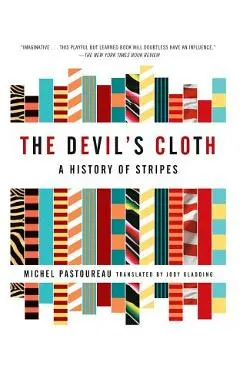
The Devil's Cloth: A History of Stripes
nTo stripe a surface serves to distinguish it, to point it out, to oppose it or associate it with another surface, and thus to classify it, to keep an eye on it, to verify it, even to censor it.
Încă îl urmărimCum s-a mișcat prețul
Ce am observat noi
la minimToate cifrele de mai sus ies din ce am notat noi, în fiecare noapte. Nu le-am luat de nicăieri.
În fiecare zi luăm cel mai mic preț dintre toate magazinele și îl punem pe grafic. Linia verde e cel mai jos a coborât în ultima lună.
Lasă-ne adresa și îți scriem dacă scade sub —. Un singur e-mail, când chiar se întâmplă ceva. Îți cerem întâi o confirmare, și te poți retrage oricând dintr-un click.
Ce zice magazinul despre el
nTo stripe a surface serves to distinguish it, to point it out, to oppose it or associate it with another surface, and thus to classify it, to keep an eye on it, to verify it, even to censor it. n Throughout the ages, the stripe has made its mark in mysterious ways. From prisoners' uniforms to tailored suits, a street sign to a set of sheets, Pablo Picasso to Saint Joseph, stripes have always made a bold statement. But the boundary that separates the good stripe from the bad is often blurred. Why, for instance, were stripes associated with the devil during the Middle Ages? How did stripes come to symbolize freedom and unity after the American and French revolutions? When did the stripe become a standard in men's fashion? In the stripe, writes author Michel Pastoureau, there is something that resists enclosure within systems. So before putting on that necktie or waving your country's flag, look to The Devil's Cloth for a colorful history of the stripe in all its variety, controversy, and connotation.
Descrierea e luată de la Libris.
Alte cărți de Michel Pastoureau






Produse similare din Istorie & societate
Vezi categoria →