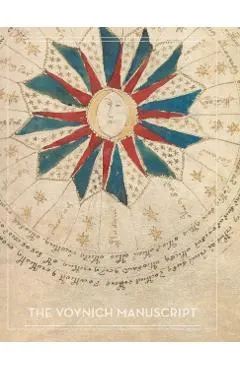
The Voynich Manuscript: Full Color Photographic Edition
n nLose yourself in one of mankind's oldest mysteries n nAn object of centuries of study and speculation, The Voynich Manuscript has been puzzling and exciting inquisitive minds since it was brought to…
Încă îl urmărimCum s-a mișcat prețul
Ce am observat noi
la minimToate cifrele de mai sus ies din ce am notat noi, în fiecare noapte. Nu le-am luat de nicăieri.
În fiecare zi luăm cel mai mic preț dintre toate magazinele și îl punem pe grafic. Linia verde e cel mai jos a coborât în ultima lună.
Lasă-ne adresa și îți scriem dacă scade sub —. Un singur e-mail, când chiar se întâmplă ceva. Îți cerem întâi o confirmare, și te poți retrage oricând dintr-un click.
Ediții identificate (2)
Ce zice magazinul despre el
n nLose yourself in one of mankind's oldest mysteries n nAn object of centuries of study and speculation, The Voynich Manuscript has been puzzling and exciting inquisitive minds since it was brought to academic attention in the 17th Century. But despite the innumerable hours experts have spent poring over its pages, the boundless sea of question marks and dead-ends threaten to drown what little confirmed knowledge years of scholarship has yielded.n nAlthough the book remains utterly indecipherable to this day, linguists have uncovered a variety of patterns in the text that they've deemed consistent with the structure of several natural languages. Because the word structures seem to be similar to those of Central and East Asian languages of the 15th Century, some linguists have suggested that the manuscript is written in a phonetic script invented to express a Vietnamese, Chinese, or Tibetan language. Others suggest that it is written in a hitherto unknown Germanic language or Nahuatl language, which would have its origins in central Mexico.n nAdding to the confusion is the relative obscurity of the manuscript's origins. Passed through the hands of a variety of movers and shakers in the 16th, 17th, and 18th Centuries, The Voynich Manuscript is said to have been in the possession of Roman Emperor Rudolph II, alchemist George Baresch, and Athanasius Kircher at various points. Emperor Rudolph II allegedly believed the author to be the Franciscan Monk and scientist Roger Bacon (1214 -1292), an assertion that is given some credence today. Nevertheless, the book's authorship remains the subject of fierce debate and speculation (especially since a recent carbon-dating of the manuscript places its creation at the beginning of the 15th Century). A number of experts contend that the manuscript is simply a wildly elaborate and remarkable hoax.n nComplete with full-color botanical, anatomical, and astrological charts that only serve to deepen the mystery, this high-quality printing of the manuscript in its entirety is the perfect addition to your library. Read carefully, the key to unravelling this titillating historical mystery could be right under your nose. . . .n
Descrierea e luată de la Libris.
Produse similare din Istorie & societate
Vezi categoria →