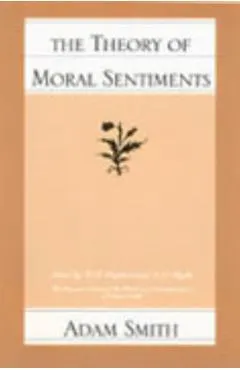
The Theory of Moral Sentiments
nThe Theory of Moral Sentiments, Smith's first and in his own mind most important work, outlines his view of proper conduct and the institutions and sentiments that make men virtuous.
A fost și mai ieftin — l-am prins la 83,90 leiCum s-a mișcat prețul
Ce am observat noi
peste minimToate cifrele de mai sus ies din ce am notat noi, în fiecare noapte. Nu le-am luat de nicăieri.
În fiecare zi luăm cel mai mic preț dintre toate magazinele și îl punem pe grafic. Linia verde e cel mai jos a coborât în ultima lună.
Lasă-ne adresa și îți scriem dacă scade sub —. Un singur e-mail, când chiar se întâmplă ceva. Îți cerem întâi o confirmare, și te poți retrage oricând dintr-un click.
Ce zice magazinul despre el
nThe Theory of Moral Sentiments, Smith's first and in his own mind most important work, outlines his view of proper conduct and the institutions and sentiments that make men virtuous. Here he develops his doctrine of the impartial spectator, whose hypothetical disinterested judgment we must use to distinguish right from wrong in any given situation. We by nature pursue our self-interest, according to Smith. This makes independence or self-command an instinctive good, and neutral rules as difficult to craft as they are necessary. But society is not held together merely by neutral rules; it is held together by sympathy. Smith argues that we naturally share the emotions and to a certain extent the physical sensations we witness in others. Sharing the sensations of our fellows, we seek to maximize their pleasures and minimize their pains so that we may share in their joys and enjoy their expressions of affection and approval. nThe Theory of Moral Sentiments, Smith's first and in his own mind most important work, outlines his view of proper conduct and the institutions and sentiments that make men virtuous. Here he develops his doctrine of the impartial spectator, whose hypothetical disinterested judgment we must use to distinguish right from wrong in any given situation. We by nature pursue our self-interest, according to Smith. This makes independence or self-command an instinctive good, and neutral rules as difficult to craft as they are necessary. But society is not held together merely by neutral rules; it is held together by sympathy. Smith argues that we naturally share the emotions and to a certain extent the physical sensations we witness in others. Sharing the sensations of our fellows, we seek to maximize their pleasures and minimize their pains so that we may share in their joys and enjoy their expressions of affection and approval. nThe Theory of Moral Sentiments, Smith's first and in his own mind most important work, outlines his view of proper conduct and the institutions and sentiments that make men virtuous. Here he develops his doctrine of the impartial spectator, whose hypothetical disinterested judgment we must use to distinguish right from wrong in any given situation. We by nature pursue our self-interest, according to Smith. This makes independence or self-command an instinctive good, and neutral rules as difficult to craft as they are necessary. But society is not held together merely by neutral rules; it is held together by sy
Descrierea e luată de la Libris.
Alte cărți de Adam Smith


Produse similare din Psihologie & filosofie
Vezi categoria →