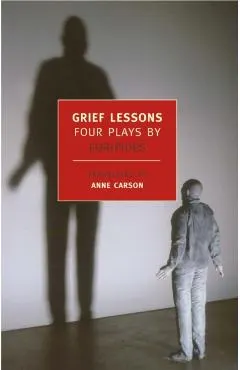
Grief Lessons: Four Plays by Euripides
nNow in paperback. nEuripides, the last of the three great tragedians of ancient Athens, reached the height of his renown during the disastrous Peloponnesian War, when democratic Athens was brought down by its…
A fost și mai ieftin — l-am prins la 97,86 leiCum s-a mișcat prețul
Ce am observat noi
peste minimToate cifrele de mai sus ies din ce am notat noi, în fiecare noapte. Nu le-am luat de nicăieri.
În fiecare zi luăm cel mai mic preț dintre toate magazinele și îl punem pe grafic. Linia verde e cel mai jos a coborât în ultima lună.
Lasă-ne adresa și îți scriem dacă scade sub —. Un singur e-mail, când chiar se întâmplă ceva. Îți cerem întâi o confirmare, și te poți retrage oricând dintr-un click.
Ce zice magazinul despre el
nNow in paperback. nEuripides, the last of the three great tragedians of ancient Athens, reached the height of his renown during the disastrous Peloponnesian War, when democratic Athens was brought down by its own outsized ambitions. Euripides, the classicist Bernard Knox has written, was born never to live in peace with himself and to prevent the rest of mankind from doing so. His plays were shockers: he unmasked heroes, revealing them as foolish and savage, and he wrote about the powerless-women and children, slaves and barbarians-for whom tragedy was not so much exceptional as unending. Euripides' plays rarely won first prize in the great democratic competitions of ancient Athens, but their combustible mixture of realism and extremism fascinated audiences throughout the Greek world. In the last days of the Peloponnesian War, Athenian prisoners held captive in far-off Sicily were said to have won their freedom by reciting snatches of Euripides' latest tragedies. n nFour of those tragedies are presented here in new translations by the contemporary poet and classicist Anne Carson. They are Herakles, in which the hero swaggers home to destroy his own family; Hekabe, set after the Trojan War, in which Hektor's widow takes vengeance on her Greek captors; Hippolytos, about love and the horror of love; and the strange tragic-comedy fable Alkestis, which tells of a husband who arranges for his wife to die in his place. The volume also contains brief introductions by Carson to each of the plays along with two remarkable framing essays: Tragedy: A Curious Art Form and Why I Wrote Two Plays About Phaidra.n
Descrierea e luată de la Libris.
Alte cărți de Euripides

Produse similare din Ficțiune & literatură
Vezi categoria →