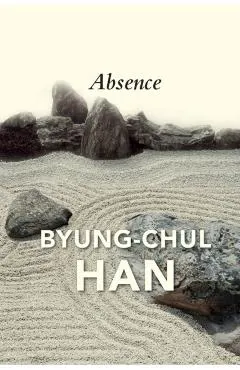
Absence: On the Culture and Philosophy of the Far East
n nWestern thinking has long been dominated by essence, by a preoccupation with that which dwells in itself and delimits itself from the other.
Încă îl urmărimCum s-a mișcat prețul
Ce am observat noi
la minimToate cifrele de mai sus ies din ce am notat noi, în fiecare noapte. Nu le-am luat de nicăieri.
În fiecare zi luăm cel mai mic preț dintre toate magazinele și îl punem pe grafic. Linia verde e cel mai jos a coborât în ultima lună.
Lasă-ne adresa și îți scriem dacă scade sub —. Un singur e-mail, când chiar se întâmplă ceva. Îți cerem întâi o confirmare, și te poți retrage oricând dintr-un click.
Ce zice magazinul despre el
n nWestern thinking has long been dominated by essence, by a preoccupation with that which dwells in itself and delimits itself from the other. By contrast, Far Eastern thought is centred not on essence but on absence. The fundamental topos of Far Eastern thinking is not being but 'the way' (dao), which lacks the solidity and fixedness of essence. The difference between essence and absence is the difference between being and path, between dwelling and wandering. 'A Zen monk should be without fixed abode, like the clouds, and without fixed support, like water', said the Japanese Zen master Dōgen.n nDrawing on this fundamental distinction between essence and absence, Byung-Chul Han explores the differences between Western and Far Eastern philosophy, aesthetics, architecture and art, shedding fresh light on a culture of absence that may at first sight appear strange and unfamiliar to those in the West whose ways of thinking have been shaped for centuries by the preoccupation with essence.n
Descrierea e luată de la Libris.
Alte cărți de Byung-chul Han
Produse similare din Psihologie & filosofie
Vezi categoria →