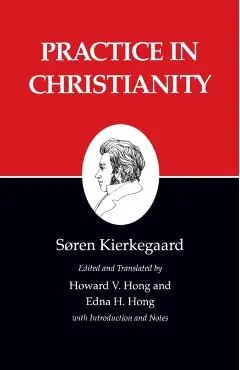
Kierkegaard's Writings, XX, Volume 20: Practice in Christianity
n nOf the many works he wrote during 1848, his richest and most fruitful year, Kierkegaard specified Practice in Christianity as the most perfect and truest thing.
Încă îl urmărimCum s-a mișcat prețul
Ce am observat noi
la minimToate cifrele de mai sus ies din ce am notat noi, în fiecare noapte. Nu le-am luat de nicăieri.
În fiecare zi luăm cel mai mic preț dintre toate magazinele și îl punem pe grafic. Linia verde e cel mai jos a coborât în ultima lună.
Lasă-ne adresa și îți scriem dacă scade sub —. Un singur e-mail, când chiar se întâmplă ceva. Îți cerem întâi o confirmare, și te poți retrage oricând dintr-un click.
Ce zice magazinul despre el
n nOf the many works he wrote during 1848, his richest and most fruitful year, Kierkegaard specified Practice in Christianity as the most perfect and truest thing. In his reflections on such topics as Christ's invitation to the burdened, the imitatio Christi, the possibility of offense, and the exalted Christ, he takes as his theme the requirement of Christian ideality in the context of divine grace. Addressing clergy and laity alike, Kierkegaard asserts the need for institutional and personal admission of the accommodation of Christianity to the culture and to the individual misuse of grace. As a corrective defense, the book is an attempt to find, ideally, a basis for the established order, which would involve the order's ability to acknowledge the Christian requirement, confess its own distance from it, and resort to grace for support in its continued existence. At the same time the book can be read as the beginning of Kierkegaard's attack on Christendom. Because of the high ideality of the contents and in order to prevent the misunderstanding that he himself represented that ideality, Kierkegaard writes under a new pseudonym, Anti-Climacus.n
Descrierea e luată de la Libris.
Produse similare din Psihologie & filosofie
Vezi categoria →