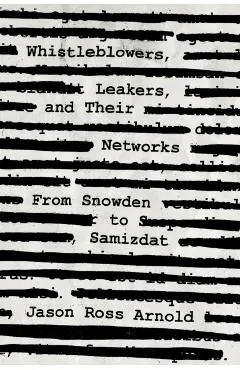
Whistleblowers, Leakers, and Their Networks: From Snowden to Samizdat
nHuman rights organizations. Hackers. Soviet dissidents.
A fost și mai ieftin — l-am prins la 140,00 leiCum s-a mișcat prețul
Ce am observat noi
peste minimToate cifrele de mai sus ies din ce am notat noi, în fiecare noapte. Nu le-am luat de nicăieri.
În fiecare zi luăm cel mai mic preț dintre toate magazinele și îl punem pe grafic. Linia verde e cel mai jos a coborât în ultima lună.
Lasă-ne adresa și îți scriem dacă scade sub —. Un singur e-mail, când chiar se întâmplă ceva. Îți cerem întâi o confirmare, și te poți retrage oricând dintr-un click.
Ce zice magazinul despre el
nHuman rights organizations. Hackers. Soviet dissidents. Animal welfare activists. Corruption-reporting apps. The world of whistleblowing is much more diverse than most people realize. It includes the prototypical whistleblowers--government and corporate employees who spill their organizations' secrets to publicize abuses, despite the personal costs. But if you look closely at what the concept entails, then it becomes clear that there are many more varieties. There is a wide world of whistleblowing out there, and we have only begun to understand and explain it. In Whistleblowers, Leakers, and Their Networks: From Snowden to Samizdat, Jason Ross Arnold clarifies the elusive concept of whistleblowing. Most who have tried to define or understand it have a sense that whistleblowers are justified secret-spillers--people who make wise decisions about their unauthorized disclosures. But we still have no reliable framework for determining which secret-spillers deserve the positively charged term whistleblower, and which ones should get stuck with the less noble moniker leaker. A better understanding can inform our frustratingly endless political debates about important cases--the Snowdens, Mannings, Ellsbergs, Deep Throats, etc.--but it can also provide guidance to would-be whistleblowers about whether or not they and their collaborators should make unauthorized disclosures. nHuman rights organizations. Hackers. Soviet dissidents. Animal welfare activists. Corruption-reporting apps. The world of whistleblowing is much more diverse than most people realize. It includes the prototypical whistleblowers-government and corporate employees who spill their organizations' secrets to publicize abuses, despite the personal costs. But if you look closely at what the concept entails, then it becomes clear that there are many more varieties. There is a wide world of whistleblowing out there, and we have only begun to understand and explain it. In Whistleblowers, Leakers, and Their Networks: From Snowden to Samizdat, Jason Ross Arnold clarifies the elusive concept of whistleblowing. Most who have tried to define or understand it have a sense that whistleblowers are justified secret-spillers-people who make wise decisions about their unauthorized disclosures. But we still have no reliable framework for determining which secret-spillers deserve the positively charged term whistleblower, and which ones should get stuck with the less noble moniker leaker. A better unde
Descrierea e luată de la Libris.
Produse similare din Istorie & societate
Vezi categoria →