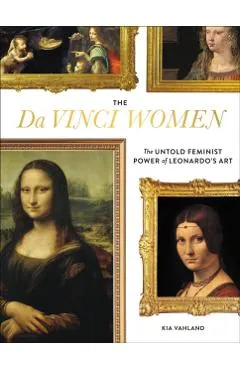
The Da Vinci Women: The Untold Feminist Power of Leonardo's Art
This new biographical look at Leonardo da Vinci explores the Renaissance master's groundbreaking portrayal of women which forever changed the way the female form is depicted.
Încă îl urmărimCum s-a mișcat prețul
Ce am observat noi
la minimToate cifrele de mai sus ies din ce am notat noi, în fiecare noapte. Nu le-am luat de nicăieri.
În fiecare zi luăm cel mai mic preț dintre toate magazinele și îl punem pe grafic. Linia verde e cel mai jos a coborât în ultima lună.
Lasă-ne adresa și îți scriem dacă scade sub —. Un singur e-mail, când chiar se întâmplă ceva. Îți cerem întâi o confirmare, și te poți retrage oricând dintr-un click.
Ce zice magazinul despre el
This new biographical look at Leonardo da Vinci explores the Renaissance master's groundbreaking portrayal of women which forever changed the way the female form is depicted. nThis new biographical look at Leonardo da Vinci explores the Renaissance master's groundbreaking portrayal of women which forever changed the way the female form is depicted. nLeonardo da Vinci was a revolutionary thinker, artist, and inventor who has been written about and celebrated for centuries. Lesser known, however, is his revolutionary and empowering portrayal of the modern female centuries before the first women's liberation movements. nBefore da Vinci, portraits of women in Italy were still, impersonal, and mostly shown in profile. Leonardo pushed the boundaries of female depiction having several of his female subjects, including his Mona Lisa, gaze at the viewer, giving them an authority which was withheld from women at the time. nArt historian and journalist Kia Vahland recounts Leonardo's entire life from April 15, 1452, as a child born out of wedlock in Vinci up through his death on May 2, 1519, in the French castle of von Cloux. Included throughout are 80 sketches and paintings showcasing Leonardo's approach to the female form (including anatomical sketches of birth) and other artwork as well as examples from other artists from the 15th and 16th centuries. Vahland explains how artists like Raphael, Giorgione, and the young Titan were influenced by da Vinci's women while Michelangelo, da Vinci's main rival, created masculine images of woman that counters Leonardo's depictions.
Descrierea e luată de la Libris.
Alte produse Kia Vahland
Produse similare din Diverse
Vezi categoria →