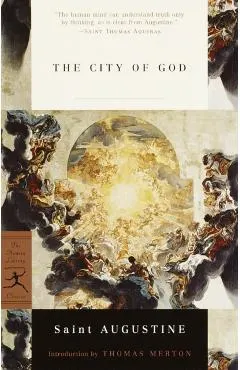
The City of God
nThe human mind can understand truth only by thinking, as is clear from Augustine.
A fost și mai ieftin — l-am prins la 89,28 leiCum s-a mișcat prețul
Ce am observat noi
peste minimToate cifrele de mai sus ies din ce am notat noi, în fiecare noapte. Nu le-am luat de nicăieri.
În fiecare zi luăm cel mai mic preț dintre toate magazinele și îl punem pe grafic. Linia verde e cel mai jos a coborât în ultima lună.
Lasă-ne adresa și îți scriem dacă scade sub —. Un singur e-mail, când chiar se întâmplă ceva. Îți cerem întâi o confirmare, și te poți retrage oricând dintr-un click.
Ediții identificate (3)
Ce zice magazinul despre el
nThe human mind can understand truth only by thinking, as is clear from Augustine. n--Saint Thomas Aquinas nSaint Augustine of Hippo is one of the central figures in the history of Christianity, and this book is one of his greatest theological works. Written as an eloquent defense of the faith at a time when the Roman Empire was on the brink of collapse, it examines the ancient pagan religions of Rome, the arguments of the Greek philosophers and the revelations of the Bible. Pointing the way forward to a citizenship that transcends worldly politics and will last for eternity, this book is one of the most influential documents in the development of Christianity. nOne of the great cornerstones in the history of Christian thought, The City of God is vital to an understanding of modern Western society and how it came into being. Begun in A.D. 413, the book's initial purpose was to refute the charge that Christianity was to blame for the fall of Rome (which had occurred just three years earlier). Indeed, Augustine produced a wealth of evidence to prove that paganism bore within itself the seeds of its own destruction. However, over the next thirteen years that it took to complete the work, the brilliant ecclesiastic proceeded to his larger theme: a cosmic interpretation of history in terms of the struggle between good and evil. By means of his contrast of the earthly and heavenly cities--the one pagan, self-centered, and contemptuous of God and the other devout, God-centered, and in search of grace--Augustine explored and interpreted human history in relation to eternity. n
Descrierea e luată de la Libris.
Produse similare din Religie & spiritualitate
Vezi categoria →