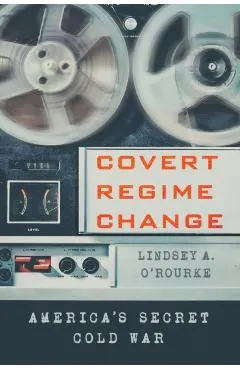
Covert Regime Change: America's Secret Cold War
nStates seldom resort to war to overthrow their adversaries.
Încă îl urmărimCum s-a mișcat prețul
Ce am observat noi
la minimToate cifrele de mai sus ies din ce am notat noi, în fiecare noapte. Nu le-am luat de nicăieri.
În fiecare zi luăm cel mai mic preț dintre toate magazinele și îl punem pe grafic. Linia verde e cel mai jos a coborât în ultima lună.
Lasă-ne adresa și îți scriem dacă scade sub —. Un singur e-mail, când chiar se întâmplă ceva. Îți cerem întâi o confirmare, și te poți retrage oricând dintr-un click.
Ce zice magazinul despre el
nStates seldom resort to war to overthrow their adversaries. They are more likely to attempt to covertly change the opposing regime, by assassinating a foreign leader, sponsoring a coup d'état, meddling in a democratic election, or secretly aiding foreign dissident groups.n nIn Covert Regime Change, Lindsey A. O'Rourke shows us how states really act when trying to overthrow another state. She argues that conventional focus on overt cases misses the basic causes of regime change. O'Rourke provides substantive evidence of types of security interests that drive states to intervene. Offensive operations aim to overthrow a current military rival or break up a rival alliance. Preventive operations seek to stop a state from taking certain actions, such as joining a rival alliance, that may make them a future security threat. Hegemonic operations try to maintain a hierarchical relationship between the intervening state and the target government. Despite the prevalence of covert attempts at regime change, most operations fail to remain covert and spark blowback in unanticipated ways.n nCovert Regime Change assembles an original dataset of all American regime change operations during the Cold War. This fund of information shows the United States was ten times more likely to try covert rather than overt regime change during the Cold War. Her dataset allows O'Rourke to address three foundational questions: What motivates states to attempt foreign regime change? Why do states prefer to conduct these operations covertly rather than overtly? How successful are such missions in achieving their foreign policy goals?n
Descrierea e luată de la Libris.
Produse similare din Istorie & societate
Vezi categoria →