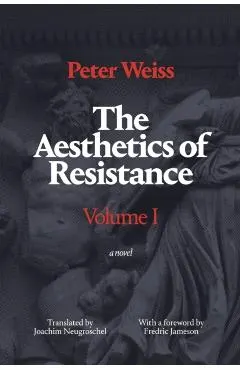
The Aesthetics of Resistance, Volume I
nA major literary event, the publication of this masterly translation makes one of the towering works of twentieth-century German literature available to English-speaking readers for the first time.
Încă îl urmărimCum s-a mișcat prețul
Ce am observat noi
la minimToate cifrele de mai sus ies din ce am notat noi, în fiecare noapte. Nu le-am luat de nicăieri.
În fiecare zi luăm cel mai mic preț dintre toate magazinele și îl punem pe grafic. Linia verde e cel mai jos a coborât în ultima lună.
Lasă-ne adresa și îți scriem dacă scade sub —. Un singur e-mail, când chiar se întâmplă ceva. Îți cerem întâi o confirmare, și te poți retrage oricând dintr-un click.
Ce zice magazinul despre el
nA major literary event, the publication of this masterly translation makes one of the towering works of twentieth-century German literature available to English-speaking readers for the first time. The three-volume novel The Aesthetics of Resistance is the crowning achievement of Peter Weiss, the internationally renowned dramatist best known for his play Marat/Sade. The first volume, presented here, was initially published in Germany in 1975; the third and final volume appeared in 1981, just six months before Weiss's death. nSpanning the period from the late 1930s to World War II, this historical novel dramatizes antifascist resistance and the rise and fall of proletarian political parties in Europe. Living in Berlin in 1937, the unnamed narrator and his peers-sixteen- and seventeen-year-old working-class students-seek ways to express their hatred for the Nazi regime. They meet in museums and galleries, and in their discussions they explore the affinity between political resistance and art, the connection at the heart of Weiss's novel. Weiss suggests that meaning lies in embracing resistance, no matter how intense the oppression, and that we must look to art for new models of political action and social understanding. The novel includes extended meditations on paintings, sculpture, and literature. Moving from the Berlin underground to the front lines of the Spanish Civil War and on to other parts of Europe, the story teems with characters, almost all of whom are based on historical figures. The Aesthetics of Resistance is one of the truly great works of postwar German literature and an essential resource for understanding twentieth-century German history.n
Descrierea e luată de la Libris.
Produse similare din Ficțiune & literatură
Vezi categoria →