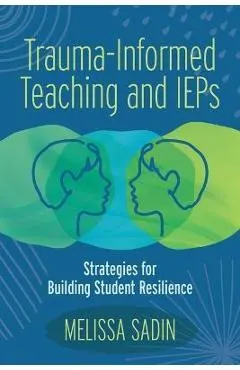
Trauma-Informed Teaching and IEPs: Strategies for Building Student Resilience
A guide to the intersection of trauma and special needs, featuring strategies teachers can use to build resilience and counter the effects of trauma on learning and behavior.
A fost și mai ieftin — l-am prins la 148,55 leiCum s-a mișcat prețul
Ce am observat noi
peste minimToate cifrele de mai sus ies din ce am notat noi, în fiecare noapte. Nu le-am luat de nicăieri.
În fiecare zi luăm cel mai mic preț dintre toate magazinele și îl punem pe grafic. Linia verde e cel mai jos a coborât în ultima lună.
Lasă-ne adresa și îți scriem dacă scade sub —. Un singur e-mail, când chiar se întâmplă ceva. Îți cerem întâi o confirmare, și te poți retrage oricând dintr-un click.
Ce zice magazinul despre el
A guide to the intersection of trauma and special needs, featuring strategies teachers can use to build resilience and counter the effects of trauma on learning and behavior.
Childhood trauma is a national health crisis. As many as two out of every three children in any classroom across the country have experienced some form of trauma. Meanwhile, a recent study in Washington State showed that 80 percent of the children eligible for special education services were exposed to early childhood trauma, which has been linked to developmental disabilities. Add in the fact that Black children are four times more likely to be classified with intellectual disabilities and five times more likely than white students to be classified with an emotional or behavioral disorder, and the already daunting complexity of effectively serving kids with an individualized education program (IEP) becomes overwhelming.
This is a whole school problem that requires a whole school solution. All educators in both general and special education should learn how trauma affects the brain and how any resulting atypical neurological and psychological development affects learning and behavior.
In Trauma-Informed Teaching and IEPs, trauma expert Melissa Sadin presents strategies for supporting the most vulnerable students in general or special education settings, across grade levels, and across the curriculum. You'll learn to* Understand the effects of childhood trauma on the brain, learning, and behavior.* Weave caring into trauma-informed instruction.* Apply a trauma-informed lens to crafting IEPs.* Conduct trauma-informed functional behavior assessments.
Once you understand the effects of trauma on learning and development, you will explore classroom strategies and IEP goals and modifications that can actually help to heal your students.
With rich examples and helpful strategies, Trauma-Informed Teaching and IEPs gives teachers the most effective tools to help build resilience for every student, no matter their needs.
Descrierea e luată de la Libris.
Produse similare din Manuale & carte școlară
Vezi categoria →