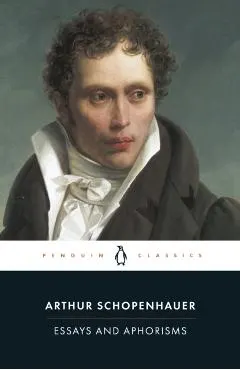
Essays and Aphorisms
One of the greatest philosophers of the nineteenth century, Schopenhauer (1788-1860) believed that human action is determined not by reason but by 'will' - the blind and irrational desire for physical…
A fost și mai ieftin — l-am prins la 79,36 leiUnde cât costă
| Magazin | Preț | Istoric | |
|---|---|---|---|
CĂ Cărturești |
86,00 lei | la minimul propriu | Vezi în magazin |
Prețurile vin automat din listele magazinelor și se mai schimbă între timp. Cel care contează e cel din coșul magazinului, la plată. Linkurile către magazine sunt de parteneriat: dacă cumperi, luăm un comision de la magazin. Pe tine nu te costă nimic în plus, iar ordinea de mai sus e strict după preț.
Cum s-a mișcat prețul
Ce am observat noi
peste minimToate cifrele de mai sus ies din ce am notat noi, în fiecare noapte. Nu le-am luat de nicăieri.
În fiecare zi luăm cel mai mic preț dintre toate magazinele și îl punem pe grafic. Linia verde e cel mai jos a coborât în ultima lună.
Lasă-ne adresa și îți scriem dacă scade sub 86,00 lei. Un singur e-mail, când chiar se întâmplă ceva. Îți cerem întâi o confirmare, și te poți retrage oricând dintr-un click.
Întrebări frecvente
Cât costă Essays and Aphorisms?
Cel mai ieftin îl găsești la Cărturești, cu 86,00 lei, din 2 magazine comparate. Verificăm cifra în fiecare zi, direct din lista de prețuri a magazinului.
Este reducerea la Essays and Aphorisms una reală?
Nu acum. Costă 86,00 lei, iar în ultima lună l-am prins și la 79,36 lei. Dacă nu te grăbești, poate merită să mai aștepți.
Care a fost cel mai mic preț la Essays and Aphorisms?
Cel mai ieftin l-am prins la 79,36 lei, prima dată pe 30 iulie 2026. Îl urmărim de 11 zile.
Merită să compar prețul la Essays and Aphorisms?
Da, și diferența nu e mică: 3,28 lei între cel mai ieftin și cel mai scump magazin. Același produs, aceeași cutie. Doar altă etichetă.
Ce zice magazinul despre el
One of the greatest philosophers of the nineteenth century, Schopenhauer (1788-1860) believed that human action is determined not by reason but by 'will' - the blind and irrational desire for physical existence. This selection of his writings on religion, ethics, politics, women, suicide, books and many other themes is taken from Schopenhauer's last work, Parerga and Paralipomena, which he published in 1851. These pieces depict humanity as locked in a struggle beyond good and evil, and each individual absolutely free within a Godless world, in which art, morality and self-awareness are our only salvation. This innovative - and pessimistic - view has proved powerfully influential upon philosophy and art, directly affecting the work of Nietzsche, Wittgenstein and Wagner among others. Arthur Schopenhauer was born in Danzig in 1788 where his family, of Dutch origin, owned a respected trading house. Arthur was expected to inherit the business, but hated the work and in 1807, after his father's suicide and the sale of the business, he enrolled in the grammar school at Gotha. He went on to study medicine and science at Gottingen University and in 1810 began to study philosophy. In 1811 he transferred to Berlin to write his doctoral thesis, and began to write The World as Will and Idea, a complete exploration of his philosophy, which was finished in 1818. Although the book failed to sell, his belief in his own views sustained him through twenty-five years of frustrated desire for fame. During his middle life he travelled widely in Europe and in 1844 brought out a much expanded edition of his book, which after his death became one of the most widely read of all philosophical works. His fame was established in 1851 with the publication of Parerga and Paralipomena, a collection of dialogues, essays and aphorisms. He died in 1860. R.J. Hollingdale has translated works by, among others, Schopenhauer, Goethe, T.A. Hoffmann, Lichtenburg and Theodor Fontane, as well as eleven of Nietzsche's books, many for the Penguin Classics. He has published two books on Nietzsche and was Honorary President of the British Nietzsche Society until his death in 2003.
Descrierea e luată de la Cărturești.
Alte cărți de Arthur Schopenhauer


Produse similare din Cărți în limbi străine
Vezi categoria →