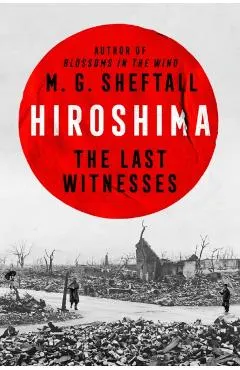
Hiroshima: The Last Witnesses
One of Washington Post's 50 Notable Works of Nonfiction From 2024 nThe first volume in a two-book series about each of the atomic bomb drops that ended the Pacific War based on years of irreplicable personal in
Încă îl urmărimCum s-a mișcat prețul
Ce am observat noi
la minimToate cifrele de mai sus ies din ce am notat noi, în fiecare noapte. Nu le-am luat de nicăieri.
În fiecare zi luăm cel mai mic preț dintre toate magazinele și îl punem pe grafic. Linia verde e cel mai jos a coborât în ultima lună.
Lasă-ne adresa și îți scriem dacă scade sub —. Un singur e-mail, când chiar se întâmplă ceva. Îți cerem întâi o confirmare, și te poți retrage oricând dintr-un click.
Ce zice magazinul despre el
One of Washington Post's 50 Notable Works of Nonfiction From 2024 nThe first volume in a two-book series about each of the atomic bomb drops that ended the Pacific War based on years of irreplicable personal interviews with survivors to tell a story of devastation and resilience n n In this vividly rendered historical narrative, M. G. Sheftall layers the stories of hibakusha--the Japanese word for atomic bomb survivors--in harrowing detail, to give a minute-by-minute report of August 6, 1945, in the leadup and aftermath of the world-changing bombing mission of Paul Tibbets, Enola Gay, and Little Boy. These survivors and witnesses, who now have an average age over ninety years old, are quite literally the last people who can still provide us with reliable and detailed testimony about life in their cities before the bombings, tell us what they experienced on the day those cities were obliterated, and give us some appreciation of what it has entailed to live with those memories and scars during the subsequent seventy-plus years. n n Sheftall has spent years personally interviewing survivors who lived well into the twenty-first century, allowing him to construct portraits of what Hiroshima was like before the bomb, and how catastrophically its citizens' lives changed in the seconds, minutes, days, weeks, months, and years afterward. He stands out among historians due to his fluency in spoken and written Japanese, and his longtime immersion in Japanese society that has allowed him, a white American, the unheard-of access to these atomic bomb survivors in the waning years of their lives. Their trust in him is evident in the personal and traumatic depths they open up for him as he records their stories. n n Hiroshima should be required reading for the modern age. The personal accounts it contains will serve as cautionary tales about the horror and insanity of nuclear warfare, reminding them--it is hoped--that the world still lives with this danger at our doorstep.n
Descrierea e luată de la Libris.
Produse similare din Istorie & societate
Vezi categoria →