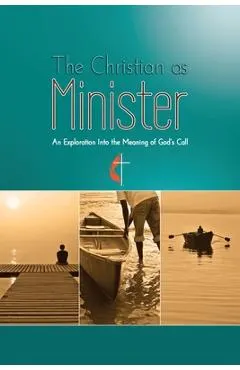
The Christian as Minister
nLearn how Methodism became a worldwide mission.n nn nIt is broadly understood that John Wesley was the founder of the Methodist movement that spread around the world in the eighteenth century.
A fost și mai ieftin — l-am prins la 99,15 leiCum s-a mișcat prețul
Ce am observat noi
peste minimToate cifrele de mai sus ies din ce am notat noi, în fiecare noapte. Nu le-am luat de nicăieri.
În fiecare zi luăm cel mai mic preț dintre toate magazinele și îl punem pe grafic. Linia verde e cel mai jos a coborât în ultima lună.
Lasă-ne adresa și îți scriem dacă scade sub —. Un singur e-mail, când chiar se întâmplă ceva. Îți cerem întâi o confirmare, și te poți retrage oricând dintr-un click.
Ce zice magazinul despre el
nLearn how Methodism became a worldwide mission.n nn nIt is broadly understood that John Wesley was the founder of the Methodist movement that spread around the world in the eighteenth century. He is known for being a missionary in Georgia, his heart-warming experience at Aldersgate, field preaching, and the famous quote the world is my parish. It is also assumed that Wesley was a proponent of world missions and helped spread the Methodist movement around the world. This study examines this assumption and, after a closer look, reveals John Wesley's reluctance to send missionaries overseas. The book uncovers several examples of Wesley's rejection of world missions and occasions when he thwarted plans. Wesley undermined the efforts of Thomas Coke, the Father of Methodist Missions, who wrote an appeal to send missionaries abroad.n nn nJohn Wesley and the Origins of Methodist Missions reveals that it was unheralded lay people, ordinary immigrants, merchants, planters, soldiers, enslaved persons, and former slaves, who carried Methodism with them to such far-off places at Antigua, Maryland, New York, Gibraltar, Nova Scotia, and Sierra Leone. Persons such as Nathaniel Gilbert, Sophia Campbell, Mary Alley, and Bessie started a multiracial Methodist Society in Antigua-the first outside of Europe. These lay people, and several others, were not officially commissioned or authorized by Wesley to plant Methodist societies. Rather they traveled on their own, motivated by the love of God and neighbor, to share their faith with others. It was only after these Methodist societies were established, and after multiple appeals, that John Wesley and the British Conference conceded to send missionaries to assist. John Wesley was not anti-mission. He was very missional in his context in England and his message of God's grace was at the heart of the Methodist movement. Yet he was cautious and reluctant to send missionaries overseas. This book offers some reasons for his hesitancy and highlights the stories, challenges, and successes of these pioneer men and women who spread Methodism around the world.n nn nForeword by Natalya Cherry.n
Descrierea e luată de la Libris.
Produse similare din Religie & spiritualitate
Vezi categoria →