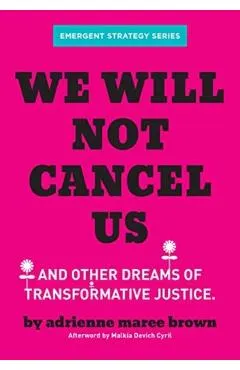
We Will Not Cancel Us: And Other Dreams of Transformative Justice
nCancel culture addresses real harm...and sometimes causes more.
A fost și mai ieftin — l-am prins la 59,52 leiCum s-a mișcat prețul
Ce am observat noi
peste minimToate cifrele de mai sus ies din ce am notat noi, în fiecare noapte. Nu le-am luat de nicăieri.
În fiecare zi luăm cel mai mic preț dintre toate magazinele și îl punem pe grafic. Linia verde e cel mai jos a coborât în ultima lună.
Lasă-ne adresa și îți scriem dacă scade sub —. Un singur e-mail, când chiar se întâmplă ceva. Îți cerem întâi o confirmare, și te poți retrage oricând dintr-un click.
Ce zice magazinul despre el
nCancel culture addresses real harm...and sometimes causes more. It's time to think this through.
Cancel or call-out culture is a source of much tension and debate in American society. The infamous Harper's Letter, signed by public intellectuals of both the left and right, sought to settle the matter and only caused greater division. Originating as a way for marginalized and disempowered people to take down more powerful abusers, often with the help of social media, cancel culture is seen by some as having gone too far. Adrienne maree brown, a respected cultural voice and a professional mediator, reframes the discussion for us, in a way that points to possible ways beyond the impasse. Most critiques of cancel culture come from outside the milieus that produce it, sometimes from even from its targets. Brown explores the question from a Black, queer, and feminist viewpoint that gently asks, how well does this practice serve us? Does it prefigure the sort of world we want to live in? And, if it doesn't, how do we seek accountability and redress for harm in a way that reflects our values? nCancel culture addresses real harm...and sometimes causes more. It's time to think this through. Cancel or call-out culture is a source of much tension and debate in American society. The infamous Harper's Letter, signed by public intellectuals of both the left and right, sought to settle the matter and only caused greater division. Originating as a way for marginalized and disempowered people to address harm and take down powerful abusers, often with the help of social media, call outs are seen by some as having gone too far. But what is too far when you're talking about imbalances of power and patterns of harm? And what happens when people in social justice movements direct their righteous anger inward at one another? In We Will Not Cancel Us, movement mediator adrienne maree brown reframes the discussion for us, in a way that points to possible paths beyond this impasse. Most critiques of cancel culture come from outside the milieus that produce it, sometimes even from from its targets. However, brown explores the question from a Black, queer, and feminist viewpoint that gently asks, how well does this practice serve us? Does it prefigure the sort of world we want to live in? And, if it doesn't, how do we seek accountability and redress for harm in ways that reflect our values? With an Afterword by Malkia Devich-Cyril. nCancel culture addresses real
Descrierea e luată de la Libris.
Produse similare din Istorie & societate
Vezi categoria →