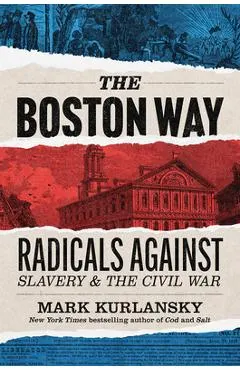
The Boston Way: Radicals Against Slavery and the Civil War
nAn untold story of the Civil War Era: pacifists in Boston who led the fight to end slavery without war.
Încă îl urmărimCum s-a mișcat prețul
Ce am observat noi
la minimToate cifrele de mai sus ies din ce am notat noi, în fiecare noapte. Nu le-am luat de nicăieri.
În fiecare zi luăm cel mai mic preț dintre toate magazinele și îl punem pe grafic. Linia verde e cel mai jos a coborât în ultima lună.
Lasă-ne adresa și îți scriem dacă scade sub —. Un singur e-mail, când chiar se întâmplă ceva. Îți cerem întâi o confirmare, și te poți retrage oricând dintr-un click.
Ce zice magazinul despre el
nAn untold story of the Civil War Era: pacifists in Boston who led the fight to end slavery without war. n n n nHas there ever been good violence or a good war? The American Civil War is likely considered to be so since there seemed to be no alternative. Or was there? Before the war, Bostonian abolitionist William Lloyd Garrison correctly predicted that fighting would not bring about real freedom and justice. If emancipation came about through violence, he believed, it would take at least a century for Black people to get their rights. As we now know, it has taken even longer than that. n n n nHere is the story of Garrison and other abolitionists, Black and white, male and female, who advocated a peaceful end to slavery and the start of human rights for Black people. The Boston Clique, as they were called, were victorious in persuading their fellow Bostonians to end Jim Crow laws on Massachusetts' railroads. Persuasion was, these pacificists believed, the only means to lasting change. n n n nIn these pages, we find Frederick Douglass and lesser-known Black abolitionists, William Nell and Charles Remond. We meet leading feminists of the nineteenth century Lydia Maria Child, Margaret Fuller, Susan B. Anthony, and Elizabeth Cady Stanton. Additional key figures include Adin Balou, William Ladd, and Noah Worcester whose voices for nonviolence impacted Leo Tolstoy, Gandhi, and Dr. Martin Luther King. n n n nStill, if it meant a faster end to the horrors of slavery, wasn't violence the answer? In time, pacificist abolitionists such as Douglass and John Brown came to believe the entire system in the South needed to be overthrown and that could only happen through the shedding of blood. Time may now provide a different perspective. n n n nWhile history has little memory of abolitionists, and even less for pacifists, nothing can be learned from that which is not remembered. What if the Civil War had never have been fought? Might we now live in a world of far greater justice and peace? What does this mean today as we still pursue righteous violence? This is the story of a road not taken.n
Descrierea e luată de la Libris.
Alte cărți de Mark Kurlansky
Produse similare din Istorie & societate
Vezi categoria →