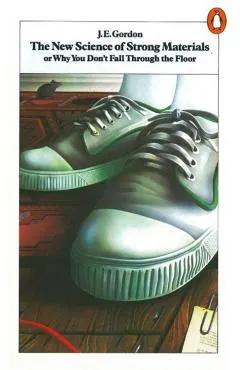
New Science of Strong Materials
Why isn't wood weaker that it is? Why isn't steel stronger?
A fost și mai ieftin — l-am prins la 74,82 leiCum s-a mișcat prețul
Ce am observat noi
peste minimToate cifrele de mai sus ies din ce am notat noi, în fiecare noapte. Nu le-am luat de nicăieri.
În fiecare zi luăm cel mai mic preț dintre toate magazinele și îl punem pe grafic. Linia verde e cel mai jos a coborât în ultima lună.
Lasă-ne adresa și îți scriem dacă scade sub —. Un singur e-mail, când chiar se întâmplă ceva. Îți cerem întâi o confirmare, și te poți retrage oricând dintr-un click.
Ce zice magazinul despre el
Why isn't wood weaker that it is? Why isn't steel stronger? Why does glass sometimes shatter and sometimes bend like spring? Why do ships break in half? What is a liquid and is treacle one? All these are questions about the nature of materials. All of them are vital to engineers but also fascinating as scientific problems. During the 250 years up to the 1920s and 1930s they had been answered largely by seeing how materials behaved in practice. But materials continued to do things that they ought not to have done. Only in the last 40 years have these questions begun to be answered by a new approach. Material scientists have started to look more deeply into the make-up of materials. They have found many surprises; above all, perhaps, that how a material behaves depends on how perfectly - or imperfectly - its atoms are arranged. Using both SI and imperial units, Professor Gordon's account of material science is a demonstration of the sometimes curious and entertaining ways in which scientists isolate and solve problems. n
Descrierea e luată de la Libris.
Produse similare din Științe & tehnică
Vezi categoria →