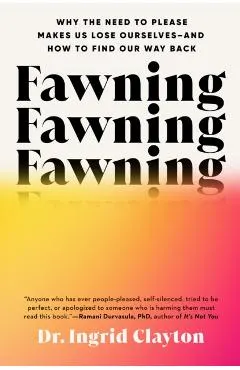
Fawning: Why the Need to Please Makes Us Lose Ourselves--And How to Find Our Way Back
From a clinical psychologist and expert in complex trauma recovery comes a powerful guide introducing fawning, an often-overlooked piece of the fight-flight-freeze reaction to trauma--explaining what it is, why
Încă îl urmărimCum s-a mișcat prețul
Ce am observat noi
la minimToate cifrele de mai sus ies din ce am notat noi, în fiecare noapte. Nu le-am luat de nicăieri.
În fiecare zi luăm cel mai mic preț dintre toate magazinele și îl punem pe grafic. Linia verde e cel mai jos a coborât în ultima lună.
Lasă-ne adresa și îți scriem dacă scade sub —. Un singur e-mail, când chiar se întâmplă ceva. Îți cerem întâi o confirmare, și te poți retrage oricând dintr-un click.
Ce zice magazinul despre el
From a clinical psychologist and expert in complex trauma recovery comes a powerful guide introducing fawning, an often-overlooked piece of the fight-flight-freeze reaction to trauma--explaining what it is, why it happens, and how to help survivors regain their voice and sense of self. nMost of us are familiar with the three Fs of trauma--flight, fight, or freeze. But psychologists have identified a fourth, extremely common (yet little-understood) response: fawning. Often conflated with codependency or people pleasing, fawning occurs when we inexplicably draw closer to a person or relationship that causes pain, rather than pulling away. n nFawning explains why we stay in bad jobs, fall into unhealthy partnerships, and seek out dysfunctional environments, even when it seems so obvious to others that we should go. And fawning can serve a purpose--it's a protective response to an unsafe situation. But when fawning turns from an emergency coping mechanism into an everyday habit, it stops being useful and starts being a real problem. n nThe good news: we can break the pattern of chronic fawning for good, once we see it for the trauma response it is. Drawing on twenty years of clinical psychology work--as well as a lifetime of experience as a recovering fawner herself--Dr. Ingrid Clayton has written a groundbreaking book that brings this emerging concept into the mainstream conversation. Readers will learn WHY we fawn, HOW to recognize the signs of fawning (including taking blame, conflict avoidance, hypervigilance, and caretaking at the expense of ourselves), and WHAT we can do to successfully unfawn and finally be ourselves, in all our imperfect perfection. n nA landmark book full of empathy and understanding, Fawning offers trauma survivors the vocabulary to discuss their experiences--and, in so doing, gives them the tools to finally heal.n
Descrierea e luată de la Libris.
Produse similare din Psihologie & filosofie
Vezi categoria →